⚠️ NJ PROPERTY TAX APPEAL DEADLINE: APRIL 1ST
Most NJ homeowners don't know they have the right to appeal their property tax assessment — and the deadline to do it is April 1st every year. Miss it, and you wait another full year. See below for a free step-by-step guide to the NJ property tax appeal process — or download it now. → [Download the Free NJ Tax Appeal Guide]
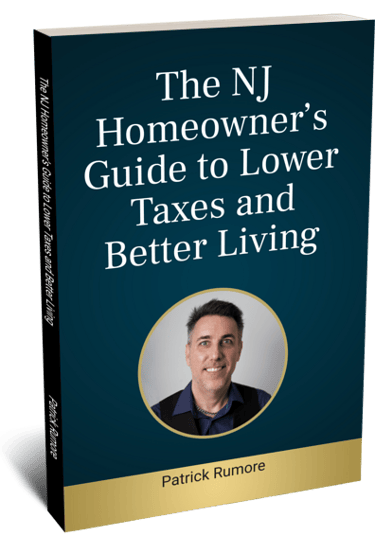
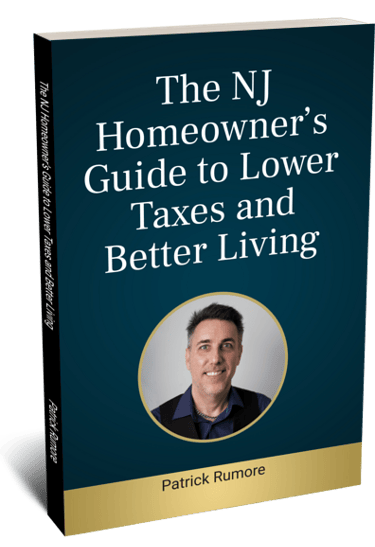
The NJ Homeowner's Guide to Lower Taxes and Better Living
A Free Guide for Northern NJ Homeowners Who Are Tired of Paying $23,000, $32,000, or $39,000 a Year in Property Taxes — and Want to Know If There's a Better Way
New Jersey has the highest property taxes in the country. The average NJ property tax bill hit $10,000 for the first time ever in 2024. In Northern NJ towns like Montclair, Maplewood, West Orange, Glen Ridge, Westfield, and Summit, homeowners routinely pay $18,000, $25,000, even $35,000 or more a year. Most people shrug and say the same thing: "It's New Jersey. Taxes are high. What can you do?" The answer is: more than you think. Not by moving to Florida. Not by giving up your school district, your commute to New York, or the neighborhood you've worked hard to get into. By understanding how the New Jersey property tax system actually works — and by discovering that a strategic move within Northern NJ can cut your annual tax bill by $8,000, $12,000, or more, while keeping everything else you care about. That is exactly what this free guide is about.
Get the Book
The NJ Homeowner's Guide to Lower Taxes and Better Living is available right now at no cost. Written by NJ REALTOR® Patrick Rumore, it's a complete, town-by-town playbook for Northern NJ homeowners who want smarter options — without leaving the state.
What's Inside the Book
This is not generic national advice. Every chapter is built around the real towns, real tax differences, and real financial decisions that Northern NJ homeowners face.
Chapter 1 — Looking at New Jersey Through a New Lens
Most Northern NJ homeowners have accepted high property taxes as a fact of life — like traffic on the Parkway. But New Jersey is not one uniform tax environment. It is a patchwork of 564 municipalities, each with its own budget, tax rate, and financial profile. Two towns separated by a 15-minute drive can differ by $15,000 or more in annual property taxes. This chapter opens your eyes to what's actually possible without leaving the state.
Chapter 2 — The Hidden Long-Term Cost of Property Taxes
A mortgage eventually disappears. Property taxes do not. They rise over time, they don't build equity, and they don't improve your home. This chapter makes the long-term math impossible to ignore. A $12,000 annual tax difference between two towns is $240,000 over 20 years — money that could have gone toward retirement, college, a second property, or simply breathing room. Real town comparisons included: West Orange vs. Paramus, Maplewood vs. Upper Saddle River, Glen Ridge vs. Mahwah.
Chapter 3 — Understanding New Jersey's Property Tax Landscape
Why does a million-dollar home in Paramus pay $18,000 in taxes while a comparable home in Maplewood pays $32,000? This chapter explains how assessed value, general tax rates, and effective tax rates work — and why the patterns repeat consistently across Bergen, Essex, Morris, Passaic, and Union Counties. Once you understand the system, you start seeing opportunities you never noticed before.
Chapter 4 — The SALT Deduction Change and What It Means for You
The federal SALT deduction cap has increased to $40,000 for tax years 2025–2029 — but it doesn't mean high property taxes are suddenly painless. This chapter explains exactly how the new cap works, who benefits, who doesn't (the cap phases out for households earning over $500,000), and why lower property taxes still matter even when more of your taxes are deductible. Note: consult your CPA for advice specific to your situation.
Chapter 5 — How Lower Taxes Let You Buy More House for the Same Monthly Payment
This is where things click. When a lender calculates what you can afford, they look at total monthly cost — mortgage, taxes, and insurance together. A $1,000 monthly reduction in property taxes can translate into $150,000 to $200,000 in additional buying power. This chapter walks through real Northern NJ town pairings showing how homeowners have moved to larger homes in better neighborhoods for the same or lower total monthly payment.
Chapter 6 — The Long-Term Wealth Impact of Choosing the Right Town
Saving $10,000 a year in property taxes and investing it modestly could mean $200,000+ in future value over 15 years. This chapter reframes the town selection decision as a long-term wealth decision — not just a lifestyle one — and shows how the compounding effect of lower taxes can reshape your financial trajectory over time.
Chapter 7 — What Higher-Income Buyers Actually Look For in New Jersey
Strong schools. Lower tax-to-value ratios. Larger lots. Long-term appreciation. This chapter maps the factors that drive demand — and appreciation — in the most desirable lower-tax Northern NJ markets, so you can position yourself in a community that holds value over time.
Chapter 8 — How to Strategically Sell Your Current Home in a High-Tax Town
When buyers in high-tax towns evaluate your home, they factor the tax bill into every offer they make. This chapter explains how to position your home's strengths, understand buyer psychology in high-tax markets, and time your sale to align with your move to a lower-tax town.
Chapter 9 — Choosing the Right Lower-Tax Town: A Simple Process That Works
Bergen County: Paramus, Mahwah, Wyckoff, Franklin Lakes, Saddle River, Upper Saddle River. Morris/Somerset: Chatham, Madison, Bernards Township, Warren, Watchung, Florham Park. This chapter gives you a step-by-step framework for comparing towns by taxes, schools, commute, lifestyle, and long-term appreciation — so you make a decision that fits your whole life, not just your tax bill
Chapter 10 — Real Scenarios That Show How This Move Changes Your Numbers
Real simplified examples — Maplewood to Paramus, Glen Ridge to Upper Saddle River, West Orange to Mahwah — showing how the monthly payment math actually plays out. Includes side-by-side comparisons of current tax burden vs. new town, monthly savings, and 15-year cumulative impact.
Chapter 11 — Your Roadmap to Making the Move (And Why the Right REALTOR® Matters)
The step-by-step process from understanding your current home's value, to identifying your financial comfort zone, to finding the right lower-tax town, to coordinating the sale and purchase. This chapter turns everything you've learned into an actionable plan — and explains exactly where Patrick fits into that process.
Bonus Chapter 1 — Paying Cash vs. Getting a Mortgage: What Makes the Most Sense?
Should you put all your equity into the new home, or carry a mortgage and keep capital working elsewhere? This chapter walks through the tradeoffs — liquidity, tax implications, opportunity cost, and stress — with a framework for the conversation to have with your CPA and financial advisor.
Bonus Chapter 2 — Turning Tax Savings Into Real Progress Instead of Disappearing Money
Saving $12,000 a year means nothing if it quietly disappears into lifestyle spending. This chapter gives you a simple allocation worksheet to direct your tax savings toward emergency funds, retirement contributions, debt payoff, college funding, or building toward a rental property — so lower taxes actually change your financial future.
Who This Book Is For
This guide was written specifically for Northern NJ homeowners who:
🏠 Live in a high-tax suburb — Montclair, Maplewood, Glen Ridge, West Orange, Verona, South Orange, Westfield, Summit, Cranford, or similar — and want to know if there's a smarter option without leaving New Jersey
📊 Are comparing Bergen County towns — Paramus, Franklin Lakes, Wyckoff, Mahwah, Saddle River, Upper Saddle River — but aren't sure how the property taxes really compare in practice
🗺️ Are exploring Morris or Somerset County — Chatham, Madison, Florham Park, Bernards Township, Warren, Watchung — and want a clear financial picture before making any decisions
💡 Want to stay in New Jersey, near New York City, but are ready to stop accepting "taxes are just high here, there's nothing you can do" as the final answer
💰 Could potentially pay cash for their next home and want to understand whether that actually makes the most financial sense
If any of these describe you, this guide was written for you — and it is completely free.
Why Patrick Wrote This Book
Patrick Rumore works with Northern NJ homeowners every day. And the same conversation kept happening, over and over.
Smart people. Financially successful families. People who had worked hard to get into the right town with the right schools. Opening their tax bill every year and feeling trapped — not because they couldn't afford it, but because nobody had ever shown them the real numbers.
Nobody had ever sat down and said: here is what West Orange actually costs versus Paramus over 20 years. Here is what the monthly payment looks like if you move to Mahwah. Here is how a different town — still in New Jersey, still near the city — could give you more home, lower monthly costs, and the same quality of life.
The standard advice was either "there's nothing you can do" or "move to Florida."
Patrick disagreed with both. So he wrote the guide.
"My role is to act as a guide and strategist. I give you the clear numbers and the plain-English framework. You do your homework, talk to your CPA and financial advisor. And when the math and the lifestyle both make sense — that's when I can help you take the next step."
— Patrick Rumore, NJ REALTOR®
Get the Free Book — What's Included
✅ The complete 12-chapter digital book
✅ Town comparison worksheets
✅ Move-Up Math framework and tools
✅ Northern NJ low-tax town list across Bergen, Essex, Morris, Passaic, and Union Counties
✅ Option to request a printed copy mailed directly to your home
Get the Book
The NJ Homeowner's Guide to Lower Taxes and Better Living is available now at njlowtax.com — including the digital version, supplemental worksheets, checklists, and buyer strategy guides.
Listen to the Book Podcast

Watch the Video Summary

Frequently Asked Questions About New Jersey Property Taxes
What towns in Northern NJ have the lowest property taxes?
Among Northern NJ communities, Bergen County towns such as Paramus, Mahwah, Wyckoff, Franklin Lakes, Saddle River, and Upper Saddle River tend to offer lower effective tax rates relative to home values than comparable towns in Essex and Union Counties. Morris and Somerset County towns including Chatham, Madison, Bernards Township, Warren, and Watchung also offer strong value per tax dollar. Patrick's free guide includes a detailed town-by-town breakdown across Bergen, Essex, Morris, Passaic, and Union Counties.
What is "Move-Up Math" and how does it work for NJ homeowners?
Move-Up Math is the framework Patrick uses throughout the guide to compare total monthly housing cost — mortgage, property taxes, and insurance — across different Northern NJ towns. Because property taxes are a major component of monthly cost, moving from a town with a $30,000 annual tax bill to one with an $18,000 bill frees up $1,000 per month. Depending on interest rates and loan terms, that $1,000 in monthly savings can translate into $150,000 to $200,000 in additional buying power — meaning you may be able to buy a significantly larger or newer home in a lower-tax town for the same total monthly payment you're making today.
What is the long-term financial cost of staying in a high-tax NJ town?
A $10,000 annual tax difference between two comparable towns adds up to $100,000 over 10 years, $150,000 over 15 years, and $200,000 over 20 years — in raw dollars alone, before any investment growth is factored in. A $15,000 difference compounds to $300,000 over 20 years. Patrick's guide walks through this math in detail using real Northern NJ town comparisons so you can see exactly what staying in a high-tax town is actually costing your household over time.
How does the SALT deduction change affect NJ homeowners in 2025 and 2026?
The federal SALT (State and Local Tax) deduction cap increased from $10,000 to $40,000 for tax years 2025 through 2029, with the cap increasing by 1% each year. This is meaningful relief for many NJ homeowners who previously could only deduct a fraction of what they paid in property and state income taxes. However, the benefit phases out for households with a modified adjusted gross income over $500,000, and the cap is currently scheduled to revert to $10,000 in 2030 unless Congress acts again. Patrick's guide covers how to think about SALT in the context of your town decision — but always consult your CPA for advice specific to your tax situation.
Can I appeal my New Jersey property tax assessment?
Yes. Every NJ property owner has the right to appeal their property tax assessment if they believe their home's assessed value is higher than its actual market value. The standard deadline to file is April 1st each year with your County Board of Taxation (exceptions: Burlington, Gloucester, and Monmouth Counties use a January 15th deadline; if your municipality underwent a full revaluation, the deadline is May 1st). Note: Patrick's book focuses on strategic relocation to lower-tax towns — it does not cover the tax appeal process in detail. See here for a free step-by-step guide to the NJ property tax appeal process.
Is it worth moving to a lower-tax town in New Jersey?
For many Northern NJ homeowners, the answer is yes — but only when the full picture makes sense. Patrick's guide is explicit that moving purely to chase a lower tax bill without considering schools, commute, lifestyle, and long-term appreciation is not a smart strategy. What the guide shows is a framework for evaluating the total picture: monthly cost, 20-year wealth impact, quality of life, and long-term property value. Some homeowners discover their current town is worth every penny. Others discover they can get more home, lower monthly costs, and a comparable or better lifestyle by moving 15 minutes in a different direction.
Does Patrick's guide tell me to leave New Jersey?
No — and that is one of the things that makes it different from most property tax advice. This guide is specifically built around staying in New Jersey, near New York City, while finding smarter financial ground within the state. The premise is simple: New Jersey is not one uniform tax environment. It is 564 municipalities, each with different budgets, tax structures, and opportunities. The guide helps you find the version of New Jersey that better matches your financial goals and lifestyle — without giving up the things you moved here for.
Ready to Talk Through Your Specific Situation?
The guide gives you the foundation. When you're ready to run the actual Move-Up Math for your current home, your current town, and the communities you're curious about — Patrick is available to walk through the real numbers with you.
No pressure. No obligation. Just a straight conversation about what's actually possible for your situation.
📞 Call or Text: 973-666-0365
📧 Patrick@ThinkOfPatrick.com
📅 Book a Free Zoom Call
DISCLAIMER
This guide and this page are for educational and informational purposes only. Patrick Rumore is a REALTOR®, not a tax professional, CPA, attorney, or investment advisor. Property taxes, home values, mortgage guidelines, and tax laws change over time. All examples, figures, and comparisons are simplified and approximate and may not reflect current conditions. Consult your tax professional, financial advisor, mortgage professional, and attorney before making any decisions about buying, selling, financing, or relocating based on property tax considerations..
Get in touch
Address
17-10 River Rd.
Suite 3C
Fair Lawn, NJ 07410